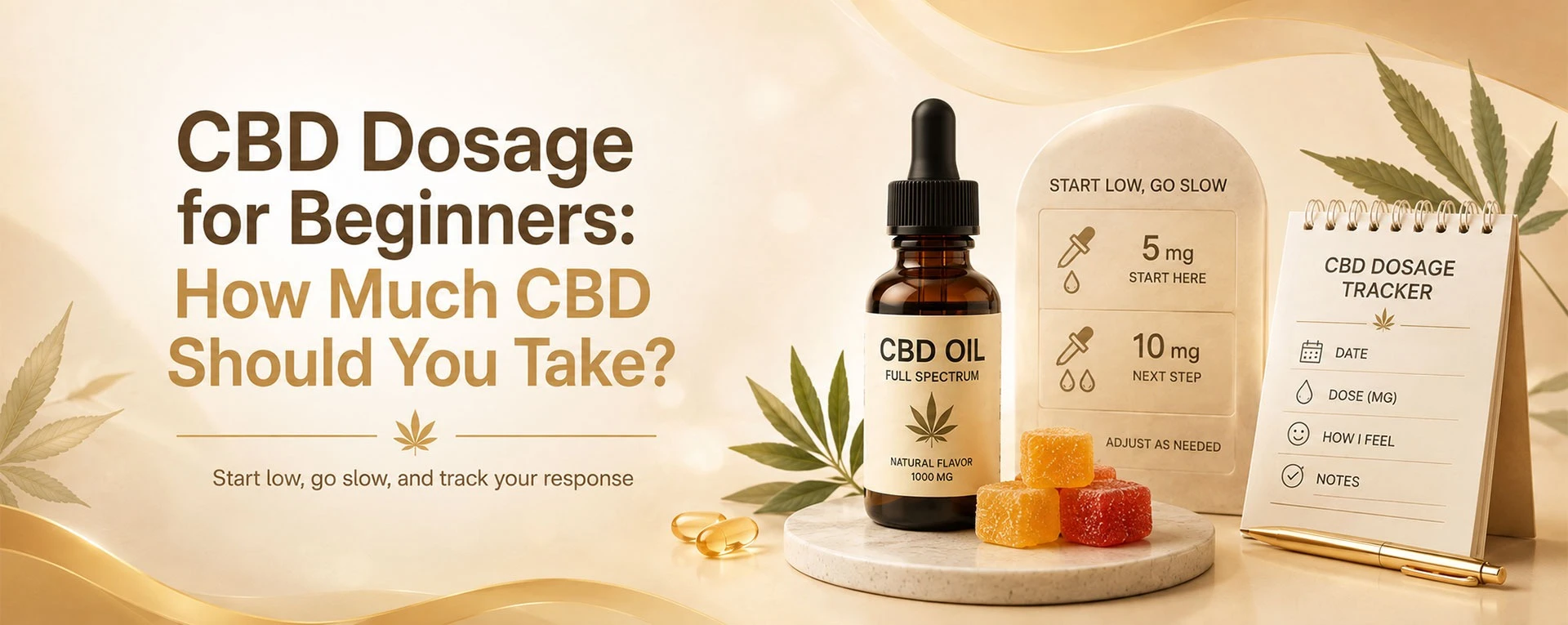
Figuring out how much CBD to take can be confusing for beginners. There is no specific CBD dose for everyone, and the FDA has not established a standard dose for over-the-counter CBD products.
CBD dosage for beginners depends on the product, concentration, your body, other medications, and how you respond. Some consumer guides use 5 to 10 mg as a low starting example, but this is not an FDA-approved dosing standard.
This CBD dosing guide walks you through the basics, shows you how to read CBD labels, and explains how oils, gummies, capsules, topicals, and inhaled products differ.
Understanding the Basics of CBD Dosage
CBD, short for cannabidiol, is one of the cannabinoids found in the Cannabis sativa plant. Unlike THC, CBD itself is not generally considered intoxicating.
You will notice CBD amounts listed in milligrams, or mg. A product may contain 10 mg in one gummy, 25 mg in one capsule, or 1,000 mg in an entire bottle of oil. The number on the front of the package does not always equal the amount in one serving.
The FDA warns that CBD can cause side effects and interact with medicines. Clear labels and current third-party testing are worth checking before you buy.
Guide to CBD Types: Key Differences to Look At
| CBD Type | What It Contains | THC |
|---|---|---|
| Full-Spectrum CBD | CBD plus other naturally occurring hemp compounds | May contain legally permitted amounts of THC |
| Broad-Spectrum CBD | CBD with several other hemp compounds | Usually formulated to reduce or remove THC, but lab results matter |
| CBD Isolate | CBD separated from most other cannabinoids and plant compounds | Typically intended to contain CBD without other cannabinoids |
Quick Note: These differences do not automatically tell you how much you should take. They help you understand what is inside the product.
How Much CBD Should a Beginner Take?
There is no medically approved starting amount for retail CBD products. Some beginner-focused consumer guides use 5 to 10 mg as an example of a low starting range. Use this only as a reference point, not as a guarantee that a certain amount is safe or effective for you.
A cautious “start low, go slow” approach can look like this:
- Check the CBD amount per serving.
- Choose one product so you can track your response clearly.
- Begin with the lowest practical labeled serving or the amount recommended by your healthcare professional.
- Give the product enough time before deciding how it affected you.
- Keep the same amount for several uses instead of changing it constantly.
- If you adjust the amount, make a small change rather than a large jump.
- Write down the amount, time, product, and anything you noticed.
If you are using CBD for anxiety, pain, sleep, or another diagnosed condition, do not copy a dose from a study or online chart. Research uses different products and amounts, and there is no standard retail CBD dose for these conditions. Discuss condition-specific use with a healthcare professional.
Calculating CBD Just From the Label
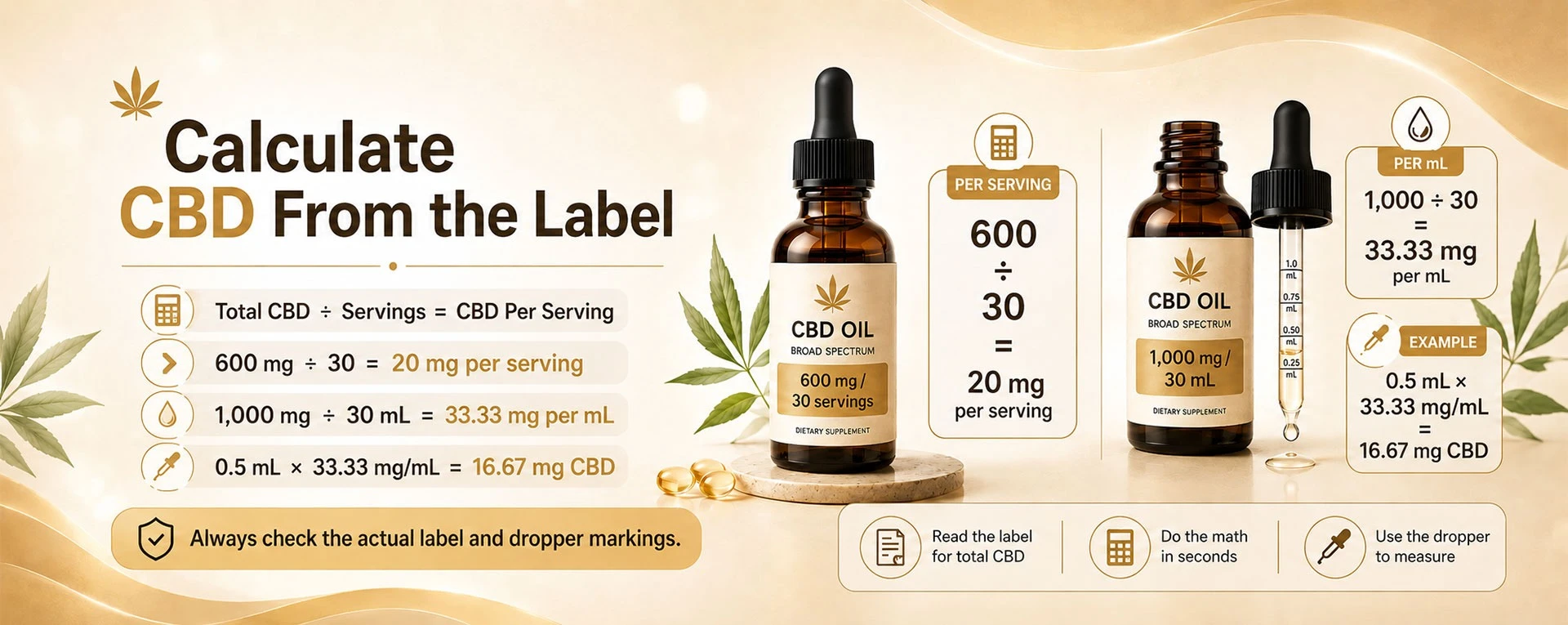
For CBD for beginners, simple label math can be more useful than a generic dosage calculator.
Total CBD ÷ number of servings = CBD per serving
For example, if a bottle contains 600 mg of CBD and provides 30 servings:
600 ÷ 30 = 20 mg per serving
For a tincture, say a 30 mL bottle contains 1,000 mg of CBD:
1,000 ÷ 30 = about 33.33 mg per mL
If the dropper clearly measures 0.5 mL, that amount would contain about 16.67 mg. Always use the actual label and dropper markings. Do not assume every dropper holds the same amount.
A CBD dosage calculator may organize information such as concentration and body weight, but it cannot establish a medically safe or effective dose. There is no standard over-the-counter CBD formula based only on body weight.
Personalizing Your Wellness: Finding the Right Dose
How you take CBD affects how easy the serving is to measure and how quickly you may notice an effect. If you are comparing formats, read Vibe District’s guide to CBD oil vs gummies.
CBD Oils and Tinctures
CBD oils and tinctures give you flexible serving control when the dropper has clear measurements. Check the total CBD, bottle volume, CBD per mL or serving, and dropper markings.
CBD Gummies
CBD gummies are easy to track because each piece contains a stated amount. Edibles pass through digestion, so do not take more simply because you do not notice anything right away.
CBD Capsules and Softgels
Capsules provide a fixed amount per piece, which can make tracking simple. Check the label carefully because concentrations vary between products.
CBD Topicals
CBD creams, balms, and lotions are applied to the skin rather than measured like an oral serving. Follow the product directions because concentration and application instructions vary.
Inhaled CBD
Inhaled CBD may be noticed sooner than swallowed formats, but estimating the exact milligrams taken from each puff can be difficult. That makes it less straightforward when you want precise serving records.
Quick Look at a CBD Dosage Chart for Beginners
A CBD dosage chart should help you understand how a product is measured rather than pretend there is one perfect dose for everyone.
| CBD Product | Beginner Reference | How to Measure It | What to Know |
|---|---|---|---|
| CBD Oil/Tincture | Some consumer guides use 5 to 10 mg as a low example | Check mg per mL or measured dropper amount | Allows smaller adjustments when the label supports them |
| CBD Gummies | Lowest practical labeled serving | Check mg per gummy | Pre-measured, but digestion can affect timing |
| CBD Capsules/Softgels | Lowest practical labeled serving | Check mg per capsule | Fixed servings make tracking simple |
| CBD Topicals | Follow product directions | Apply according to the label | Not directly comparable with oral CBD dosing |
| Inhaled CBD | No standard puff-based dose | Check potency and label | Exact intake can be harder to measure |
Note: The 5 to 10 mg example is not an FDA-approved starting dose.
What Factors Affect Your Personal CBD Experience?
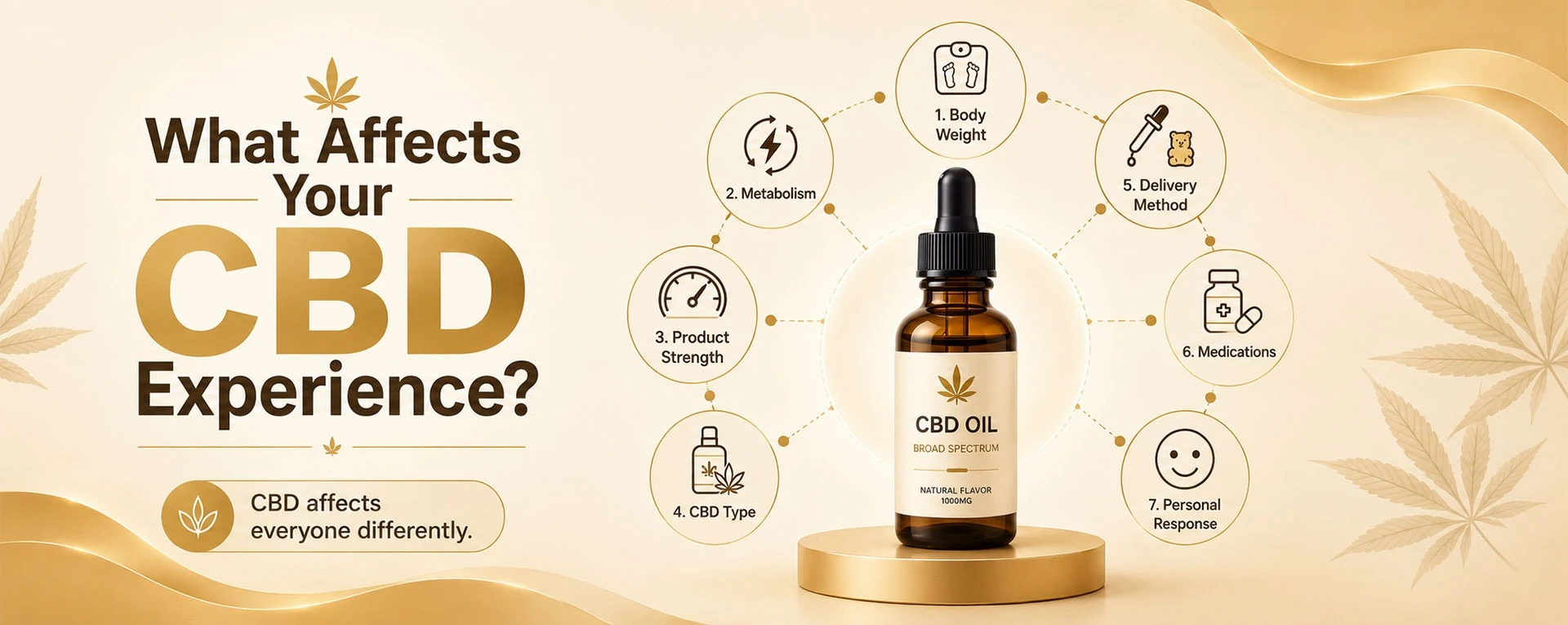
There is no one-size-fits-all CBD amount. Your response can change based on your body, the product, and how you use it.
- Body weight: Weight may be one factor, but there is no validated retail CBD mg-per-pound formula.
- Metabolism: Differences in metabolism can affect how your body processes CBD.
- Product strength: CBD concentration varies between products.
- CBD type: Full-spectrum, broad-spectrum, and isolate products have different cannabinoid profiles.
- Delivery method: Oils, gummies, capsules, topicals, and inhaled products are measured and absorbed differently.
- Food intake: Food can affect oral CBD absorption.
- Medications: CBD may interact with certain medicines.
- Personal response: People can respond differently to the same labeled amount.
Be cautious with charts that calculate a dose only from body weight. Weight alone does not account for formulation, medications, health conditions, or individual response.
Using a Simple CBD Tracker
If you change the serving, product, and timing every day, it becomes difficult to tell what affected your experience. Record the product, CBD amount, time taken, whether you had eaten recently, and anything you noticed afterward.
- Monday: 5 mg at 7 p.m.
- Tuesday: 5 mg at 7 p.m.
- Wednesday: 5 mg at 7 p.m.
This example shows how to track, not what dose you should take. If you are using the same product consistently and are not having side effects, keeping notes for 7 to 14 days can make patterns easier to review before changing the amount.
Potential Side Effects of CBD to Watch For
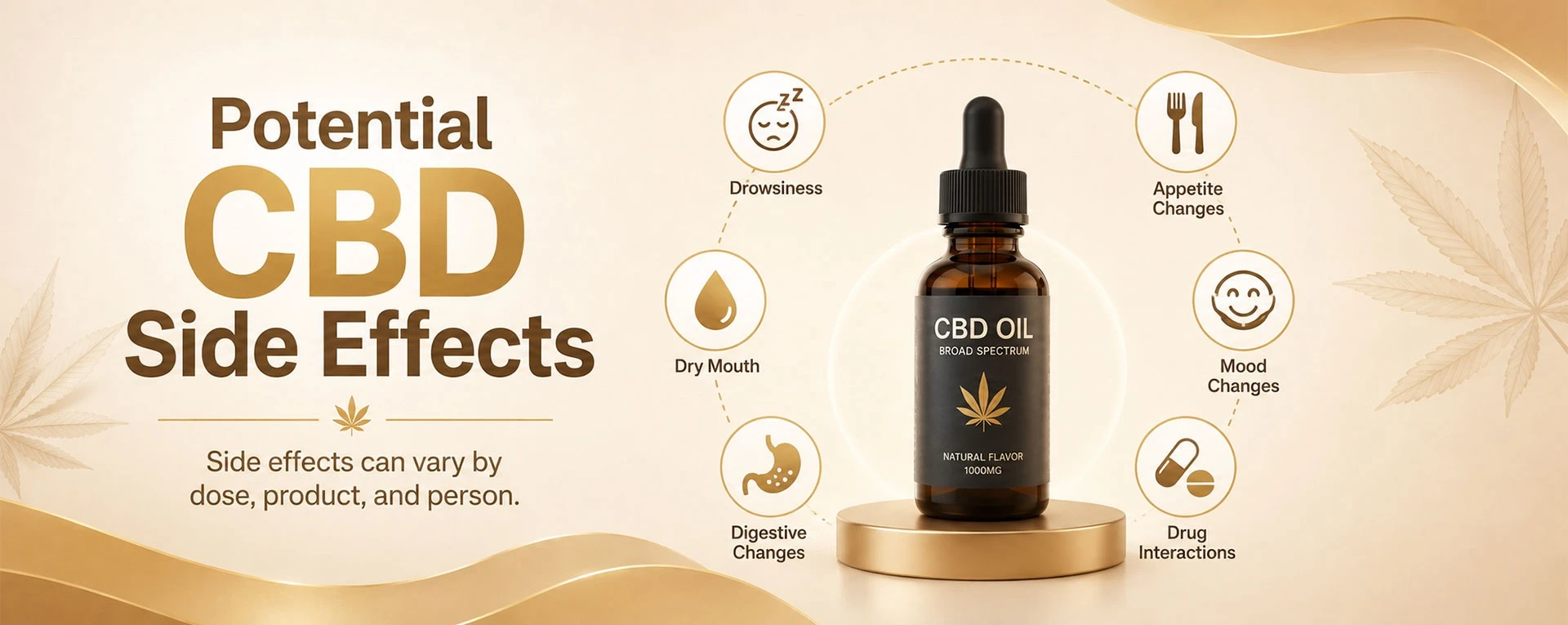
CBD may cause side effects. The FDA lists concerns that include:
- Drowsiness: You may feel more tired or sleepy than usual.
- Digestive changes: Diarrhea, decreased appetite, or stomach discomfort can occur.
- Mood changes: Some people may notice irritability or agitation.
- Liver injury: CBD has the potential to affect the liver.
- Drug interactions: CBD can change how certain medications work.
If you take prescription or over-the-counter medicines, ask a doctor or pharmacist about possible interactions before adding CBD.
Is CBD Legal in Florida?
Florida law allows qualifying hemp and hemp extract products, but products sold in the state must meet specific requirements.
Under Florida Statute 581.217, hemp may contain no more than 0.3% total delta-9 THC on a dry-weight basis, while hemp extract is subject to a 0.3% total delta-9 THC limit on a wet-weight basis. Florida also requires qualifying hemp extract to meet testing and certificate-of-analysis requirements.
Laws and product rules can change, so check current state requirements when purchasing CBD.
Picking Your CBD When You Are New to It
Start with clear labels and simple serving information. You can browse CBD products at Vibe District and use these checks:
- Check the CBD amount per serving.
- Know whether it is full-spectrum, broad-spectrum, or isolate.
- Review the THC content.
- Choose a format that is easy to measure.
- Look for a current third-party COA.
- Read the ingredient list.
- Stick with one product while tracking your response.
For more help comparing extract types and labels, read the Vibe District CBD guide.
One Easy Example for Beginners
A bottle marked “1,000 mg” may look stronger than a gummy marked “10 mg,” but the 1,000 mg can refer to the whole bottle. If that bottle contains 30 mL, it averages about 33 mg per mL. The gummy label may already tell you that each piece contains 10 mg.
That is why reading CBD per serving matters more than comparing the biggest number printed on the front.
Final Takeaway
There is no single best CBD dosage for beginners. Start by understanding the label, use one product at a time, and track your response before making changes. A cautious routine is more useful than chasing a number from a generic dosage chart.
For shoppers in Hallandale Beach and South Florida, comparing CBD labels and formats in person can also make the first purchase less confusing. Vibe District offers different CBD formats and staff support for understanding labels and available options.
Important Note: This article is for general educational purposes only. It is not medical advice and does not establish a safe or effective CBD dose for any individual or medical condition.
FAQs
How much CBD should I take as a beginner?
There is no official universal CBD dose for beginners. Some consumer guides use 5 to 10 mg as a low starting example, but it is not an FDA-established safe dose.
Can you take too much CBD?
CBD can cause side effects, and higher or repeated doses may increase certain risks. The FDA says important questions remain about how much CBD people can use and for how long without potential harm.
How do I calculate my CBD dosage?
Check the milligrams of CBD in each serving. If only the total amount is shown, divide total CBD by the number of servings. For tinctures, divide total CBD by bottle volume in mL.
How long does CBD take to work?
There is no exact timeline for everyone. Product type, food intake, formulation, metabolism, and individual response can all affect timing.
Should CBD dosage be based on body weight?
Body weight may be one factor, but there is no standard consumer CBD-by-weight formula for over-the-counter products.
Can I take CBD with medication?
CBD can interact with some medications. Ask a doctor or pharmacist before combining CBD with prescription or over-the-counter medicines.
What is the easiest CBD product for a beginner to measure?
Gummies and capsules provide fixed amounts per piece, while tinctures can offer more flexible measurement when the dropper is clearly marked.