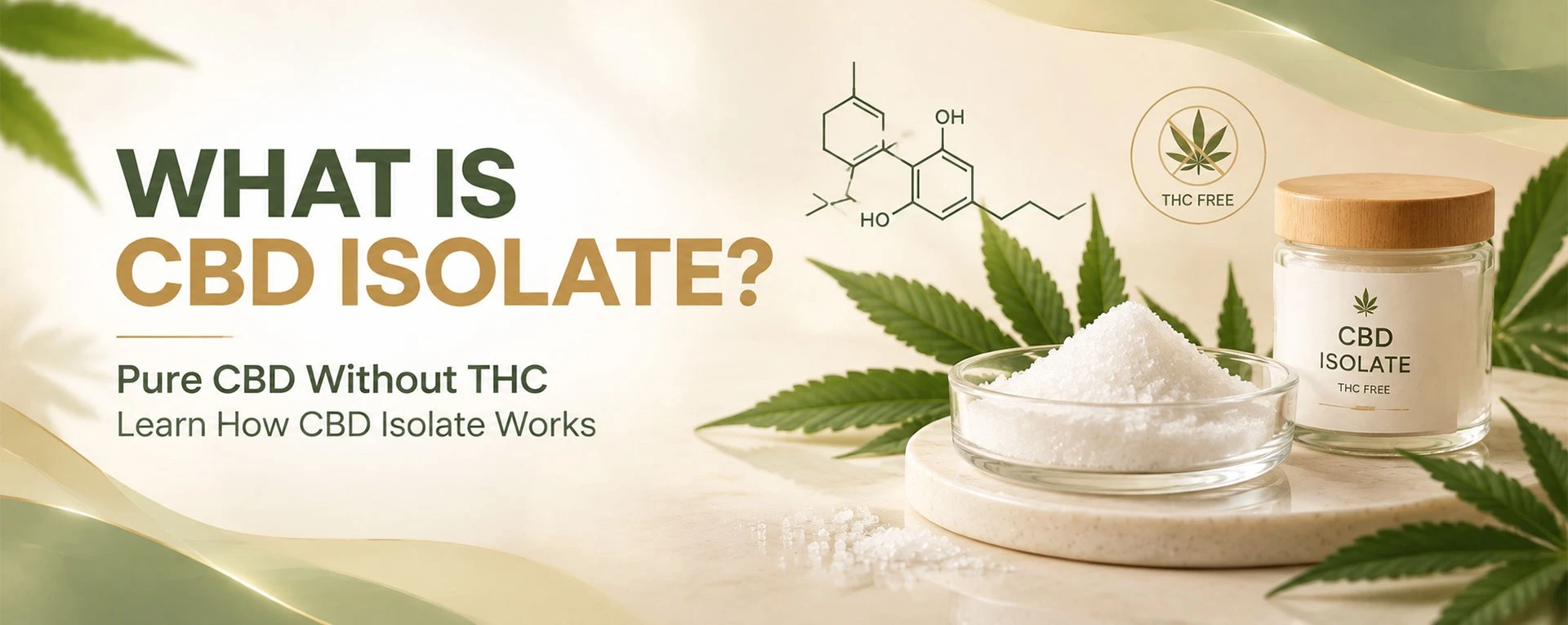
CBD isolate is a stripped-back form of cannabidiol. It removes other hemp compounds and leaves a concentrated powder or crystal. It suits shoppers who want THC-free CBD, a neutral taste, and more control over the amount they use.
What Is CBD Isolate?
CBD isolate is cannabidiol that has been separated from the other compounds in hemp. Instead of containing a mixture of cannabinoids, aromatic terpenes, waxes, and plant pigments, it is refined into a concentrated ingredient. The finished material usually looks like a white powder, small crystals, or a translucent solid.
A product labeled CBD isolate is often advertised as 99% or higher CBD. That is a reference, not a guarantee. Check the product’s Certificate of Analysis, or COA, for the CBD amount, THC result, batch number, test date, and contaminant screening.
Purity describes the share of CBD in the ingredient, not absorption or effectiveness. At 99% purity, 1 gram contains about 990 milligrams of CBD. The remaining material is why the batch report matters.
CBD isolate is different from CBD oil. CBD oil is a finished product that combines CBD with a carrier oil, such as MCT oil or hemp seed oil. You can compare ready-to-use CBD oil options, while isolate is the concentrated ingredient used to make an oil, a CBD tincture, a topical, or another finished product.
How Does CBD Isolate Work?
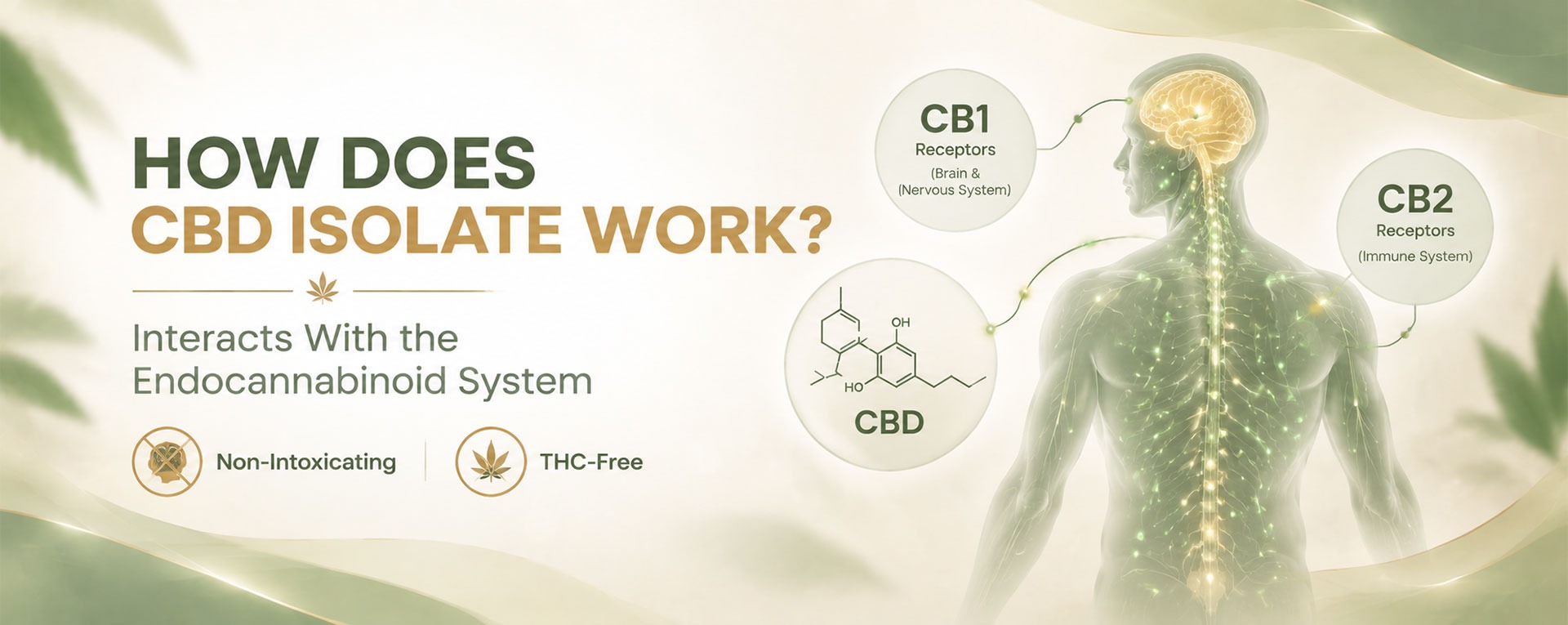
CBD does not create the high associated with THC. It interacts with the endocannabinoid system, which includes natural endocannabinoids, CB1 and CB2 receptors, and regulating enzymes. This system is involved in mood, sleep, pain perception, appetite, and immune response.
CBD does not work like THC, which directly activates CB1 receptors. It appears to influence receptor activity and other targets more indirectly, so the experience may feel subtle. Isolate also lacks the wider plant profile associated with the entourage effect.
Research needs context. In 2018, the FDA approved Epidiolex, a prescription medicine containing purified CBD, for specific rare seizure disorders. That approval does not mean over-the-counter CBD products have the same dose or evidence. The National Center for Complementary and Integrative Health explains that consumer CBD research is still developing.
In a small 2019 case series of 72 adults, about 79% reported lower anxiety scores and about 67% showed improved sleep scores in the first month. The study had no placebo group. CBD is also being studied for pain and inflammation, but this does not establish CBD isolate as a treatment.
How Is CBD Isolate Made?
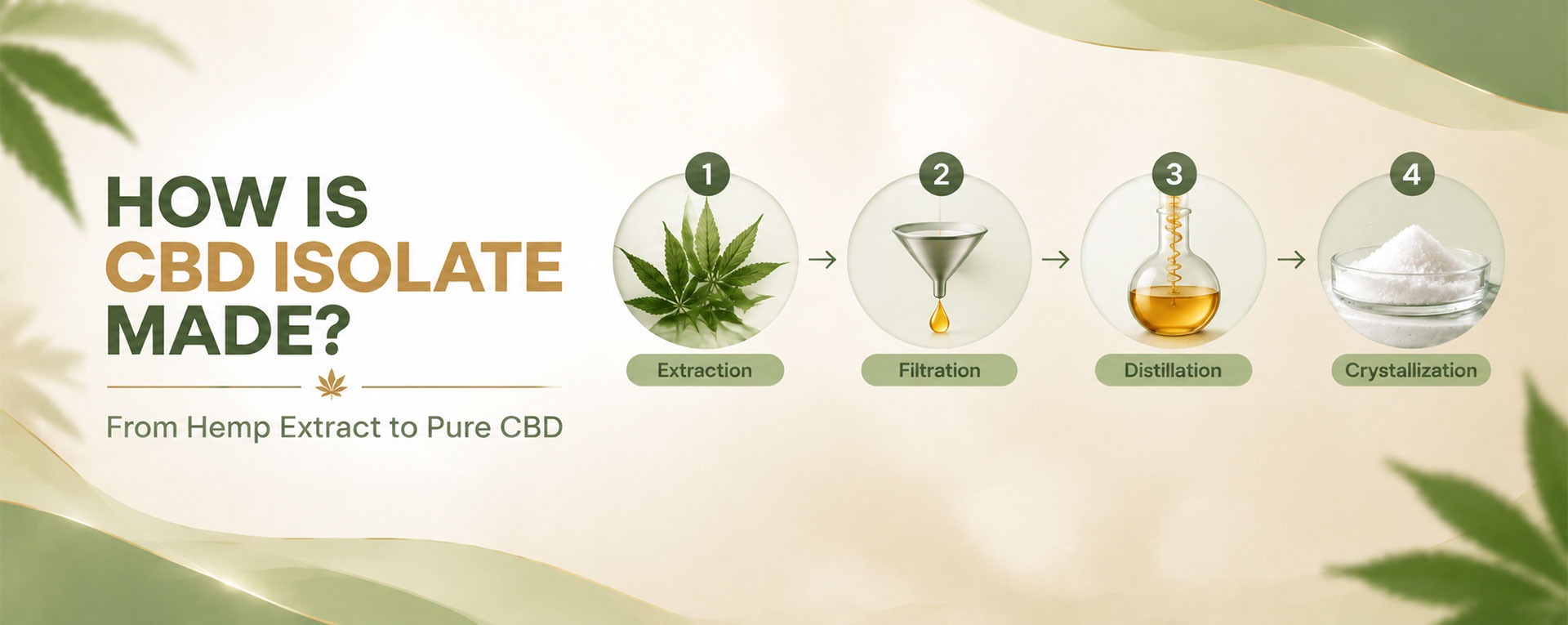
Manufacturers generally begin with hemp extract that contains CBD and other plant compounds. A typical process follows these stages:
- Extraction: Supercritical carbon dioxide or another controlled method pulls cannabinoids and plant compounds from hemp.
- Winterization: Cooling and filtration remove fats, waxes, and other unwanted material.
- Distillation: Heat and pressure help concentrate CBD and separate it from THC, terpenes, and other cannabinoids.
- Crystallization: The CBD is crystallized, filtered, and dried before it is milled into CBD powder or sold as CBD crystal.
| Metric | Reference | Why it matters |
|---|---|---|
| Typical isolate claim | 99% or higher CBD | Confirm the batch result on the COA |
| Quantity reference | 1 gram = 1,000 milligrams | At 99% purity, that is about 990 milligrams of CBD |
| Example oil mix | 1 gram in 30 milliliters | About 33 milligrams of CBD per milliliter before loss |
| Federal hemp reference | Up to 0.3% delta-9 THC | Rules vary by product and location, so check current requirements |
For a quality check, the COA should also cover pesticides, heavy metals, residual solvents, and microbes.
CBD Isolate vs. Full-Spectrum CBD vs. Broad-Spectrum CBD
All three formats can deliver CBD, but they differ in the compounds that remain after extraction. Use the table below as a starting point, then confirm the label and COA for the specific product.
| Type | THC | Other cannabinoids | Terpenes | Why people choose it |
|---|---|---|---|---|
| CBD isolate | Not intentionally present; verify the COA | No | No | Neutral taste, precise measurement, and a THC-free preference |
| Full-spectrum CBD | May contain up to 0.3% delta-9 THC under the federal hemp definition | Yes | Usually | A broader hemp profile and interest in the entourage effect |
| Broad-spectrum CBD | Designed to contain no detectable THC; verify the COA | Yes | Usually | Multiple hemp compounds without intentionally added THC |
Choose CBD isolate when simplicity and ingredient control matter most. Full-spectrum CBD may suit someone who wants a wider range of hemp compounds and accepts the possibility of trace THC. Broad-spectrum CBD sits between the two. It can provide cannabinoids and terpenes while aiming to remove THC.
The 0.3% figure is a federal hemp threshold, not a promise that every product on the market is accurately labeled. The CDC notes that CBD products can carry risks and that labels may not tell the whole story. A current, batch-matched COA matters more than a front-label claim.
How to Use CBD Isolate
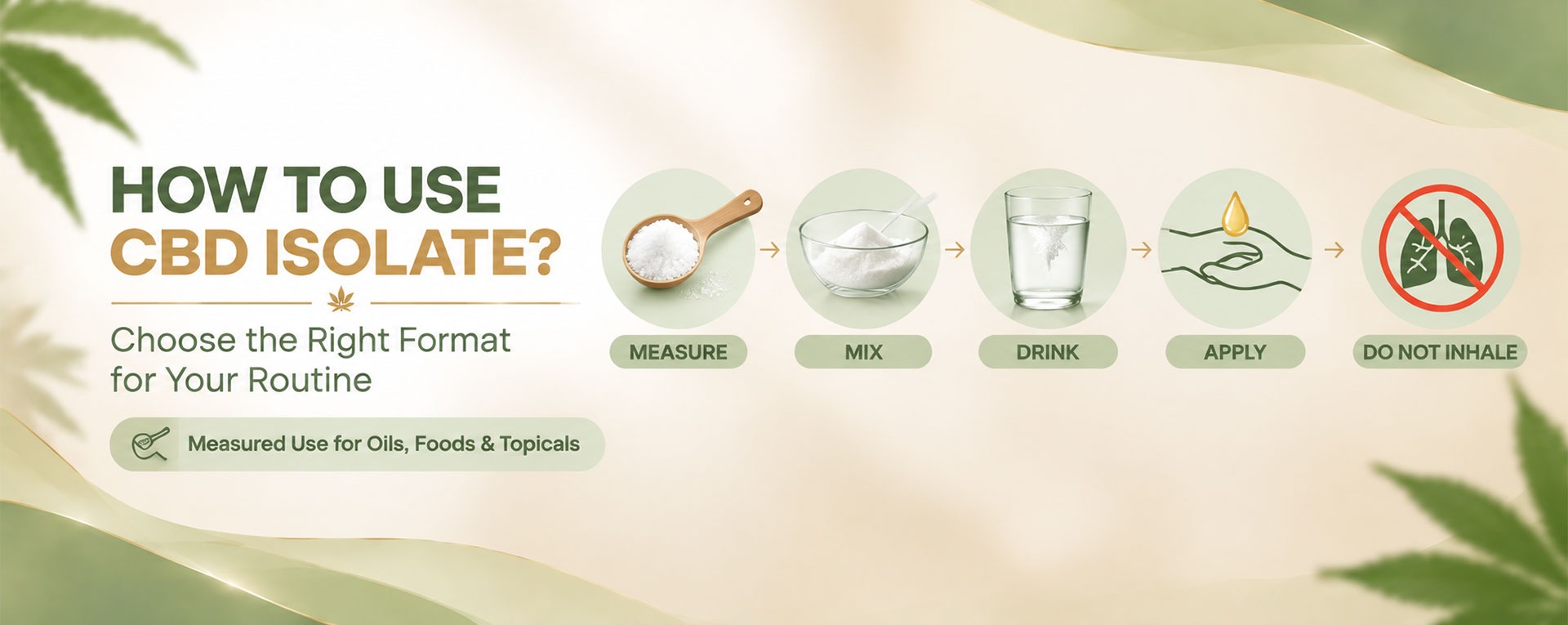
CBD isolate has little flavor and aroma. Choose a measured ingredient, finished product, or topical based on your routine.
- CBD oil or tincture: Mixing 1 gram, or 1,000 milligrams, of 99% isolate into 30 milliliters of oil produces about 33 milligrams of CBD per milliliter before measurement loss. Measure carefully and mix thoroughly.
- Food and drinks: Blend it into a smoothie, drink, or recipe. Mixing a large batch and dividing it evenly is more consistent than adding an unmeasured pinch to one serving.
- Topicals: Isolate can be added to a lotion, balm, or oil intended for the skin. Browse CBD topicals if you prefer a ready-made format. A topical is not an oral serving.
- Finished CBD products: A ready-made tincture, gummy, or oil can be easier for beginners because the label lists the amount per serving.
- Inhaled products: Do not heat or inhale a powder unless the product is specifically formulated and labeled for that route. Avoid improvising with ingredients that are not intended for inhalation.
CBD Isolate Dosage Basics
There is no universal CBD dose. Some cautious starter guidance begins at 5 to 10 milligrams, while some adults later use 10 to 20 milligrams. Start at the lower end of the product directions and observe your response before changing the amount. Concentration, body size, metabolism, food intake, route of use, and sensitivity can affect the experience.
Use a milligram scale for raw CBD powder or crystal. Kitchen spoons are not precise enough. Keep a simple record of the product, amount, time, and response.
Is CBD Isolate Safe?
CBD isolate does not contain THC when the batch is made and tested as claimed, but THC-free does not mean risk-free. Possible CBD side effects include drowsiness, diarrhea, changes in appetite, irritability, or other changes in how you feel. CBD can also affect how the liver processes some medicines.
Talk with a healthcare professional before using CBD if you take prescription medication, have a liver condition, are pregnant or breastfeeding, or are considering CBD for a child. Use extra care with medicines carrying a grapefruit warning or causing sedation. The FDA’s consumer guidance on CBD discusses interactions and safety concerns.
CBD isolate is often selected by people who want to avoid THC or reduce the chance of THC exposure. Still, no retailer can guarantee a drug-test result. Cross-contamination, inaccurate labels, and manufacturing errors are possible. If testing is important for your job, sport, or legal situation, review the COA and consider discussing the choice with a qualified professional.
Research on long-term consumer CBD use remains limited. Potential concerns include liver enzyme changes and medication interactions. If you use CBD isolate regularly, arrange periodic reviews with a healthcare professional. When traveling, check official rules before carrying it across a border.
What to Check on a COA
- The laboratory is independent from the brand and identifies the testing methods used.
- The batch number on the report matches the batch number on the package.
- The CBD result is reported in milligrams or a clear percentage.
- The THC result is listed as non-detectable when that is the product claim.
- Contaminant panels include pesticides, heavy metals, residual solvents, and microbes.
- The test date is recent enough to represent the product you are buying.
Where to Buy CBD Isolate in Hallandale Beach
When comparing CBD products in Hallandale Beach, look beyond pure or THC-free claims. Ask for the COA, compare CBD per serving, and identify whether the product is powder, crystal, oil, or tincture.
Vibe District Smoke & Wellness gives local shoppers a way to explore CBD products in store. The team can help you read a label, understand the difference between isolate and full-spectrum CBD, and choose a format that matches your routine.
Visit Vibe District at 4 W Hallandale Beach Blvd, Hallandale Beach, FL 33009, or call (954) 544-5396. You can also browse the Vibe District online store before visiting.
Frequently Asked Questions About CBD Isolate
What is CBD isolate?
CBD isolate is refined cannabidiol separated from other hemp compounds. It is commonly sold as a powder or crystal and is often tested at 99% or higher CBD. The exact purity and THC result should be confirmed with the batch COA.
Is CBD isolate the same as CBD oil?
No. CBD isolate is a concentrated ingredient. CBD oil is a finished product that combines CBD with a carrier oil. A tincture may also contain flavorings or other ingredients.
Does CBD isolate contain THC?
True isolate is made to remove THC, but the label should not be your only check. Look for a current, third-party COA that shows a non-detectable THC result for the specific batch.
How much CBD isolate should a beginner use?
Many beginners start with 10 to 20 milligrams and wait to assess their response before changing the amount. A healthcare professional can provide advice that accounts for medication, health conditions, and personal risk factors.
Can CBD isolate cause a positive drug test?
CBD itself is not the target of a standard THC test, but product contamination or inaccurate labeling can create a risk. If a test matters, choose a product with batch-specific testing and understand that no over-the-counter product can guarantee an outcome.
Is long-term use of CBD isolate safe?
Long-term research on consumer CBD isolate is limited. Possible concerns include liver enzyme changes and medication interactions, so regular users should review their routine with a healthcare professional, especially when taking prescription medicines.
The Bottom Line
CBD isolate is a concentrated, flexible form of CBD for people who prefer a neutral ingredient and want to avoid intentionally added THC. Its typical 99% or higher purity, 1,000-milligram-per-gram reference point, and ability to mix into oils, drinks, food, and topicals make it easy to customize. The best buying decision still comes down to the COA, accurate serving information, responsible use, and a clear understanding of what the current evidence can and cannot show.
If you want help comparing CBD isolate, full-spectrum CBD, broad-spectrum CBD, or a ready-to-use CBD tincture, visit Vibe District in Hallandale Beach or explore the available CBD products online.