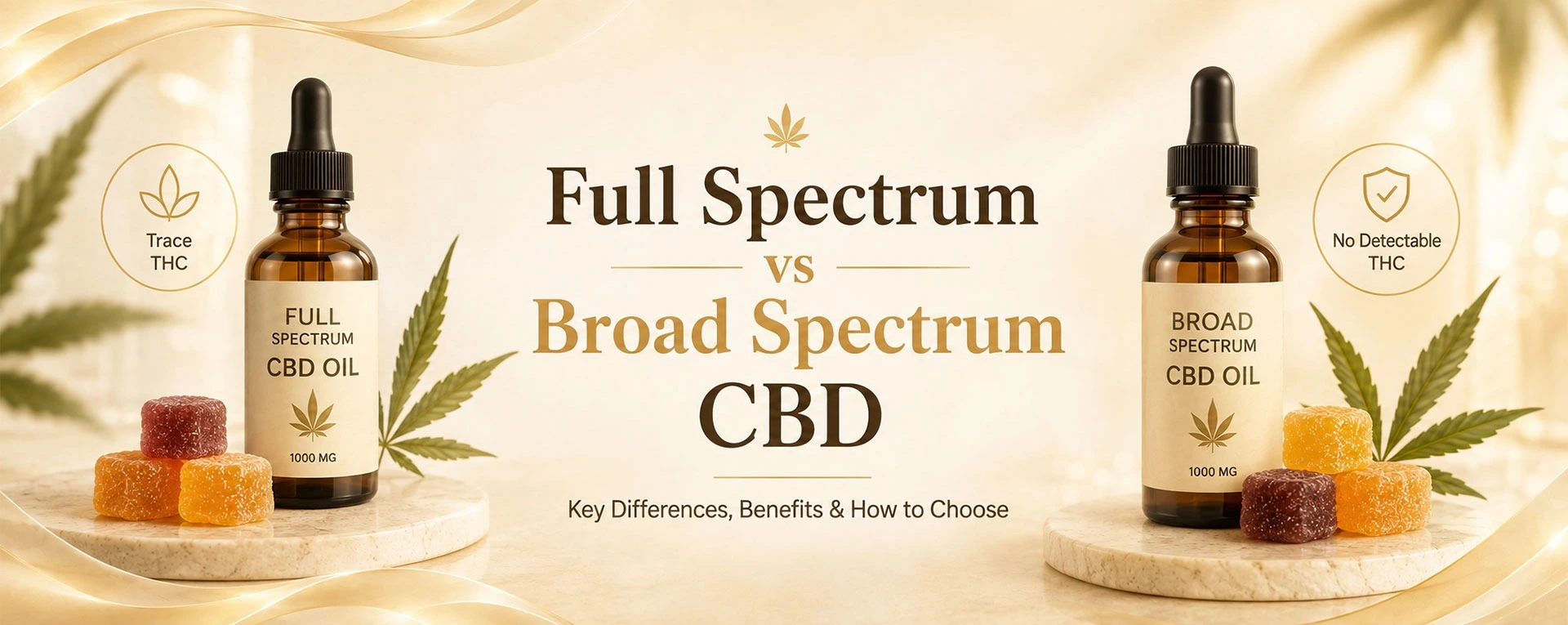
Quick Read: Full-spectrum vs broad-spectrum CBD mainly comes down to THC and the range of hemp compounds in the formula. Full-spectrum CBD keeps CBD plus other cannabinoids, terpenes, flavonoids, and trace THC. Broad-spectrum CBD keeps multiple hemp compounds but is processed to remove or reduce THC to non-detectable levels. CBD isolate is the simplest option because it contains highly purified CBD with most other cannabinoids removed.
| CBD Type | What It Usually Contains | THC Consideration |
|---|---|---|
| Full-Spectrum CBD | CBD, other cannabinoids, terpenes, flavonoids, and other hemp compounds | May contain a permitted amount of THC |
| Broad-Spectrum CBD | CBD plus several other hemp compounds | Usually formulated without detectable THC |
| CBD Isolate | Highly purified CBD | No intentionally added THC |
Labels such as full-spectrum CBD, broad-spectrum CBD, and CBD isolate can be confusing at first. All three can come from hemp, but they differ in how much of the plant’s original cannabinoid and terpene profile remains after processing.
The right choice depends on your THC preference, product format, drug-testing concerns, ingredients, and the batch test results. If you are new to the category, Vibe District’s CBD guide explains the basics of labels, serving amounts, spectrum types, and lab reports.
What Is Full-Spectrum CBD?
Full-spectrum CBD contains CBD along with other naturally occurring compounds found in hemp. Depending on the source material and final formula, these may include:
- Minor cannabinoids such as CBG, CBC, or CBN
- Terpenes that contribute aroma and flavor
- Flavonoids and other plant compounds
- Trace amounts of THC
Full-spectrum products are often described as having a broader hemp profile because more of the plant’s original compounds remain in the finished extract. That does not mean every full-spectrum product has the same cannabinoid or terpene mix. The actual profile depends on the plant, extraction method, and formulation.
Benefits and Considerations of Full-Spectrum CBD
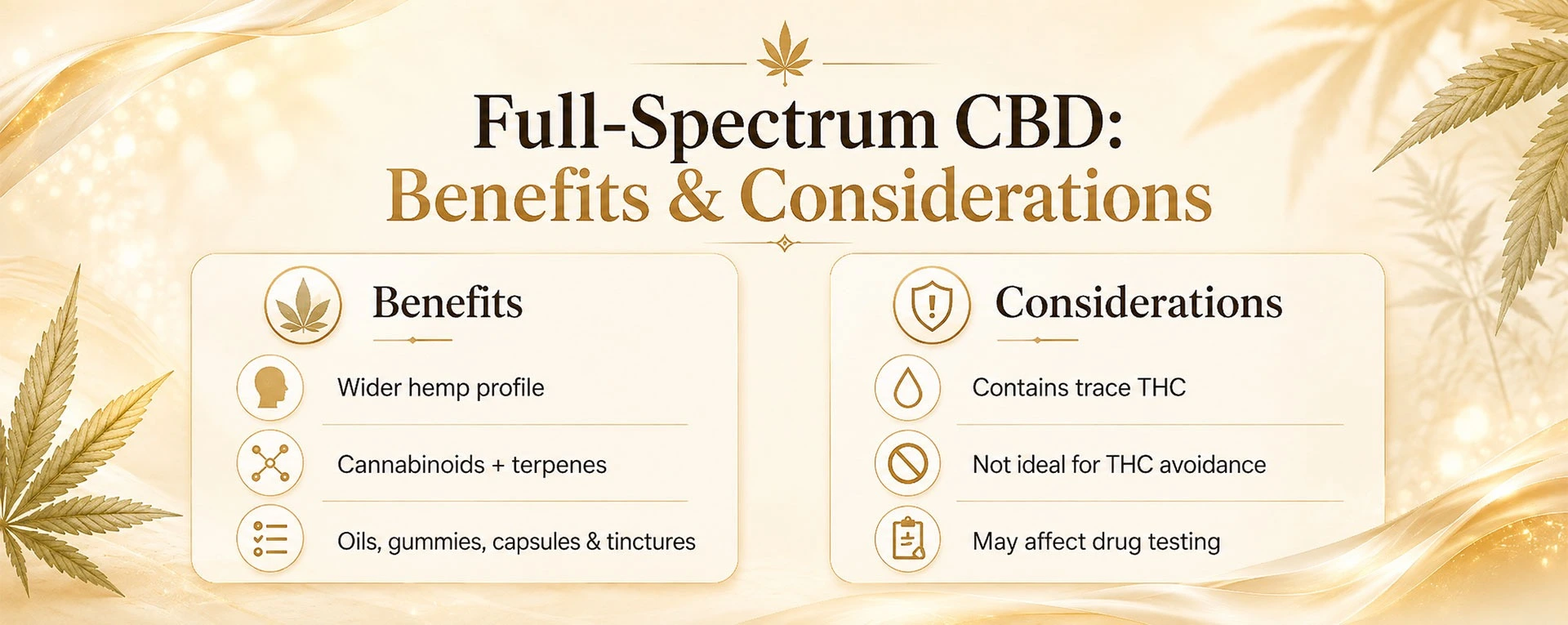
For shoppers who want a wider hemp profile, full-spectrum CBD can be appealing because it keeps more naturally occurring cannabinoids and terpenes in one formula. It is available in common formats such as CBD oil, CBD gummies, capsules, softgels, and CBD tincture products.
The main consideration is THC. Even when the amount is small, full-spectrum CBD is not the best fit for someone who wants to avoid THC completely. It can also create a drug-testing concern. No CBD product can guarantee a negative drug test, but full-spectrum products carry a clearer THC exposure risk because THC may be present by design.
What Is Broad-Spectrum CBD?
Broad-spectrum CBD sits between full-spectrum CBD and CBD isolate. It usually contains CBD plus a selection of other cannabinoids and terpenes, but the extract goes through extra processing to remove or reduce THC.
Minor cannabinoids and terpenes can still vary from one broad-spectrum product to another. For example, one formula may show CBG or CBC on its lab report, while another may contain only small amounts of additional cannabinoids. Terpenes such as myrcene, limonene, pinene, linalool, or caryophyllene may also be naturally retained or added back during formulation.
Because the term “broad-spectrum” is a product description, the batch Certificate of Analysis, or COA, matters more than the front label alone. A properly tested broad-spectrum product should show the actual THC result and the cannabinoids detected by the lab.
Benefits and Considerations of Broad-Spectrum CBD
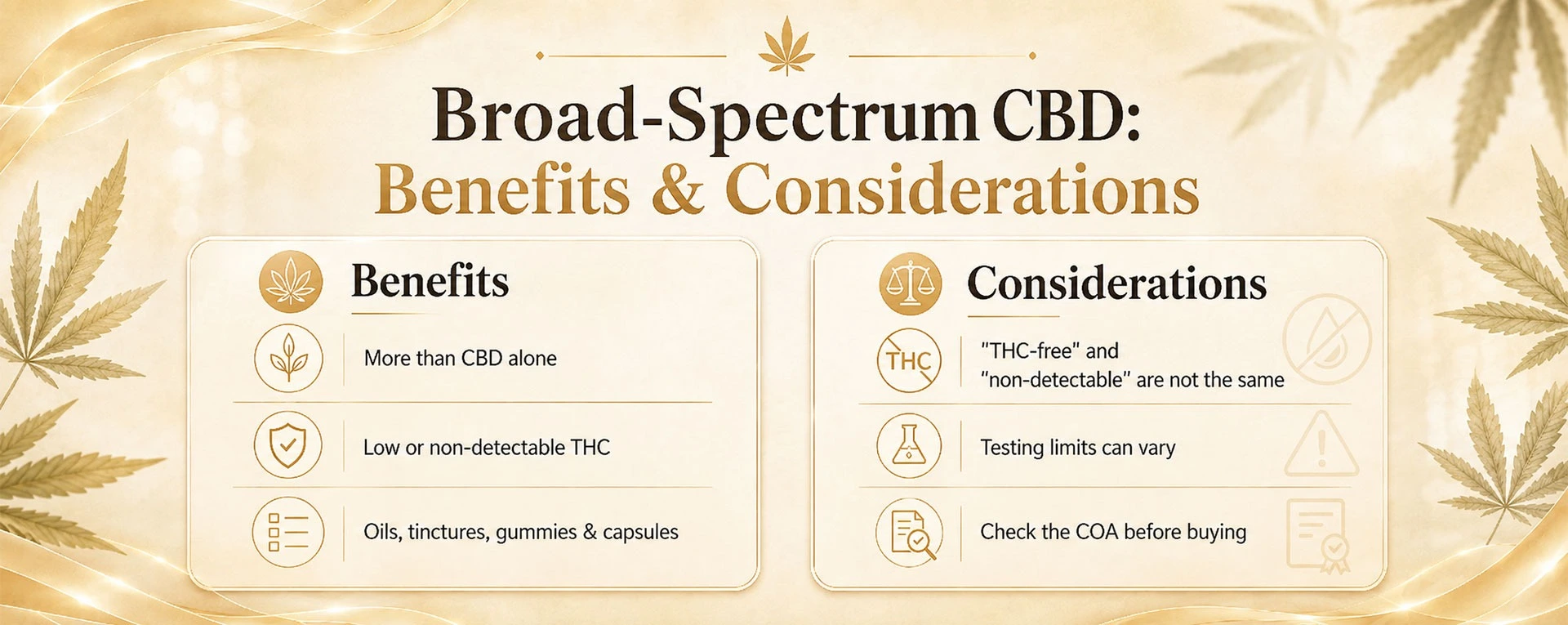
Broad-spectrum CBD may suit adults who want more than CBD alone but prefer to minimize THC. It is available in oils, tinctures, gummies, capsules, and other formats.
Still, “THC-free” and “non-detectable THC” are not always identical claims. Testing limits vary, and products can differ by batch. If avoiding THC is important because of personal preference, sensitivity, or workplace drug testing, review the COA instead of relying only on package wording.
How Does CBD Isolate Compare?
CBD isolate is a highly refined form of cannabidiol. Most other cannabinoids, terpenes, and plant compounds are removed during processing. This creates a simpler cannabinoid profile than full-spectrum or broad-spectrum CBD.
CBD isolate may appeal to people who want a straightforward CBD formula or want to avoid intentionally added THC and other cannabinoids. However, the finished product can still contain carrier oils, sweeteners, flavors, or other ingredients, so the complete label and COA are still worth checking.
How Are Full-Spectrum and Broad-Spectrum CBD Made?
Both types begin with hemp material that is processed to separate cannabinoids and other compounds from the plant. Common extraction methods include carbon dioxide, often called CO2 extraction, and ethanol extraction. The resulting extract can then be filtered, refined, tested, and blended into a carrier oil or another finished product.
Broad-spectrum CBD usually requires an additional THC-removal step. One method is chromatography, which separates compounds based on their chemical properties. Manufacturers may also use other refinement steps depending on the process. The goal is to reduce or remove THC while keeping selected cannabinoids and terpenes.
Extraction does not automatically tell you whether a product is better. A current lab report is more useful for comparing the final cannabinoid profile.
What Is the Entourage Effect?
The entourage effect is the idea that cannabinoids, terpenes, and other cannabis compounds may influence one another when they are present together. It is one reason full-spectrum and broad-spectrum formulas are often discussed differently from CBD isolate.
A 2024 scoping review found limited evidence that the entourage effect is stable or predictable across cannabinoid products. Full-spectrum CBD should not automatically be treated as more effective than broad-spectrum CBD or CBD isolate.
CBD also interacts with the body’s endocannabinoid system and several other signaling pathways, but its activity is more complex than simply switching CB1 or CB2 receptors on. Individual response can vary with serving amount, metabolism, food intake, body composition, other ingredients, medications, and frequency of use.
Full Spectrum vs Broad Spectrum CBD: Benefits and Drawbacks
| CBD Type | Main Advantage | Main Consideration |
|---|---|---|
| Full-Spectrum CBD | Includes a wider range of hemp compounds | Contains or may contain THC |
| Broad-Spectrum CBD | Keeps multiple hemp compounds while minimizing THC | COA is needed to confirm the tested THC result |
| CBD Isolate | Simple, highly purified CBD profile | Does not include the broader cannabinoid profile of the other two types |
CBD Oil, Gummies, or Tinctures: Does the Spectrum Type Matter?
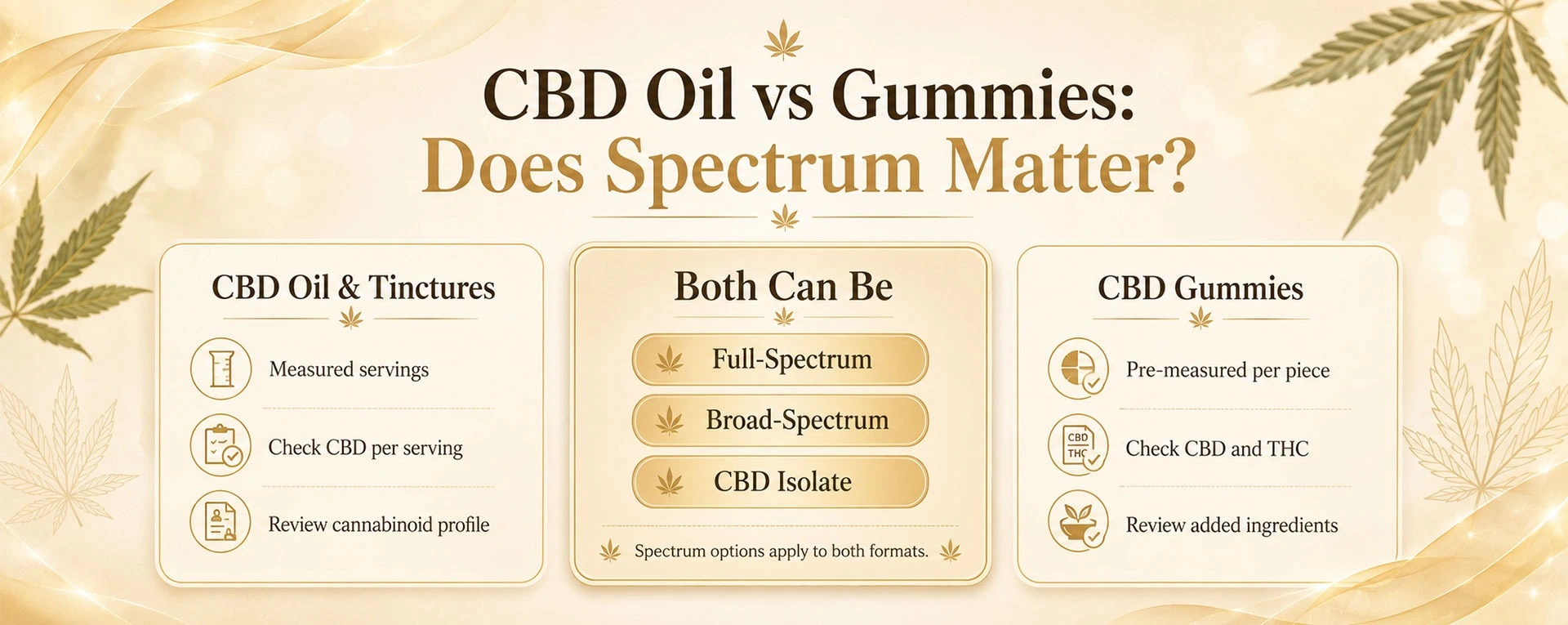
The spectrum type tells you which hemp compounds are present. The product format tells you how the product is measured and used. Both matter.
CBD Oil and CBD Tincture
CBD oil and CBD tincture products commonly come with a dropper, which can make the labeled serving easier to measure. They may be full-spectrum, broad-spectrum, or isolate-based. Check the CBD per serving, bottle volume, dropper markings, carrier oil, and cannabinoid profile. You can compare current CBD oils and tinctures by format and strength.
CBD Gummies
CBD gummies offer a pre-measured amount per piece, but the spectrum type can still differ. Check the CBD per gummy, THC information, added cannabinoids, sugar, flavors, and other active ingredients. Vibe District’s CBD gummies category can help you compare available options, and the CBD oil vs gummies guide explains the format differences in more detail.
How to Choose Between Full-Spectrum and Broad-Spectrum CBD
Before buying, use a few practical checks instead of assuming one spectrum is best for everyone.
- Decide how you feel about THC. Full-spectrum is the more obvious fit if you are comfortable with trace THC. Broad-spectrum or isolate may fit better if you want to minimize it.
- Check the COA. Match the batch number, review CBD and THC results, check the test date, and look for available contaminant testing.
- Choose a format you can use consistently. Gummies are pre-measured. Oils and tinctures offer more flexibility when the dropper is clearly marked.
- Consider personal factors. Food intake, metabolism, body composition, medications, sensitivity, and other active ingredients can change the experience.
- Think about drug testing. No spectrum can promise a negative result. If testing matters, review the COA and speak with the testing program or a qualified professional.
If you switch from one spectrum type to another, treat it as a new product. Compare the CBD per serving, THC result, other cannabinoids, and added ingredients. Follow the new label rather than assuming the serving matches your previous product.
CBD Side Effects and Safety
CBD is not risk-free. The FDA notes possible effects such as drowsiness, digestive discomfort, diarrhea, appetite changes, and mood changes. CBD can also interact with medications, and combining it with alcohol or other sedating substances may increase drowsiness.
Retail CBD products are not approved to diagnose, treat, cure, or prevent diseases. If you take prescription medication, have a medical condition, are pregnant or breastfeeding, or have questions about CBD and drug testing, speak with a qualified healthcare professional before use.
Understanding CBD Laws and Product Testing in Florida
Florida hemp extract rules include requirements for testing, labeling, and packaging. A batch COA is important because it provides cannabinoid results and helps confirm whether the tested product meets applicable THC and contaminant requirements.
Hemp rules can change at both the federal and state level. A federal hemp definition change is scheduled to take effect on November 12, 2026, so check current requirements rather than relying on an old label or article.
When shopping in Florida, look for a clear batch number, accessible COA, cannabinoid amounts, ingredient list, expiration information, and retailer transparency.
Compare CBD Options at Vibe District
Vibe District in Hallandale Beach offers adults a place to compare CBD formats, cannabinoid profiles, labels, and available lab information. If you want to browse more broadly, see the CBD products selection or explore brands such as CBDfx.
Instead of choosing by the largest milligram number or package claim, compare the spectrum type, CBD per serving, THC result, other ingredients, and batch testing.
Final Thoughts
Understanding full-spectrum vs broad-spectrum CBD makes CBD labels much easier to read. Full-spectrum CBD keeps a wider hemp profile and may include trace THC. Broad-spectrum CBD keeps multiple hemp compounds while reducing or removing THC. CBD isolate offers a more purified CBD-only cannabinoid profile.
Before choosing CBD oil, CBD gummies, or a CBD tincture, read the label, review the COA, consider your THC preference, and choose a format that fits your routine. There is no single spectrum type that is automatically best for everyone.
FAQs
What is the difference between full-spectrum and broad-spectrum CBD?
The main difference is THC and the final hemp profile. Full-spectrum CBD contains CBD, other hemp compounds, and may contain trace THC. Broad-spectrum CBD keeps multiple hemp compounds but is processed to remove or reduce THC to non-detectable levels.
Does full-spectrum CBD contain THC?
Full-spectrum CBD may contain trace THC. Check the product’s current COA for the actual batch result instead of relying only on the front label.
Is broad-spectrum CBD completely THC-free?
Broad-spectrum CBD is generally formulated to have no detectable THC, but detection limits and batches can vary. A COA is the best way to check the tested result.
What is CBD isolate?
CBD isolate is a highly purified form of CBD with most other cannabinoids and plant compounds removed. The finished product may still contain carrier oils, flavors, sweeteners, or other ingredients.
Which CBD type is best for beginners?
There is no single best type for every beginner. Broad-spectrum or isolate may appeal to someone who wants to minimize THC, while full-spectrum may suit someone comfortable with a wider hemp profile. Clear labeling and batch testing matter more than the label category alone.
Can CBD cause a positive drug test?
It is possible. Full-spectrum products may contain THC, and mislabeled or contaminated products can also create risk. No CBD product should be treated as a guarantee of a negative drug test.
How do I check CBD product quality?
Look for a batch-matched COA, recent test date, cannabinoid results, THC information, contaminant testing when available, clear ingredients, and accurate CBD per serving.