If you are comparing CBD oil vs CBD capsules, the key difference is how your body absorbs them. CBD oil, often called a CBD tincture, is commonly held under the tongue before swallowing. CBD capsules and CBD softgels are swallowed and processed through the digestive system. That affects onset, duration, taste, dosing, and convenience.
Typical estimates show that CBD oil may begin to take effect in 15 to 45 minutes, while capsules may take 45 to 120 minutes. Oil is often associated with a 4 to 6 hour duration, while capsules may last 6 to 8 hours. These are comparison ranges, not guarantees. Strength, meal timing, body chemistry, and serving size can change the experience.
Quick Read: Choose CBD oil for faster onset and adjustable dosing. Choose CBD capsules for a tasteless, discreet format with a fixed dose and potentially longer duration. The best option depends on how quickly you want to feel it, how much control you want over your CBD dosage, and which format you can use consistently.
Ready to compare products? Shop CBD oils and tinctures or browse CBD products in store at Vibe District.
CBD Oil vs CBD Capsules at a Glance
| Factor | CBD Oil or Tincture | CBD Capsules or Softgels |
|---|---|---|
| Main route | Under the tongue, then swallowed | Swallowed and digested |
| Typical onset | 15 to 45 minutes | 45 to 120 minutes |
| Typical duration | 4 to 6 hours | 6 to 8 hours |
| Estimated bioavailability | About 13% to 35% | About 6% to 15% |
| Dosing | Adjustable by measured amount | Fixed amount per capsule |
| Taste | May have an earthy hemp flavor | Usually tasteless |
| Best fit | People who value speed and flexibility | People who value routine and convenience |
| Long-term cost | May offer more control over amount used | Simple to track, but fixed servings may cost more over time |
These are typical estimates, not guarantees. Results vary by formula, strength, serving size, food intake, metabolism, and individual response. See this systematic review of CBD pharmacokinetics for background.
What Is CBD Oil?
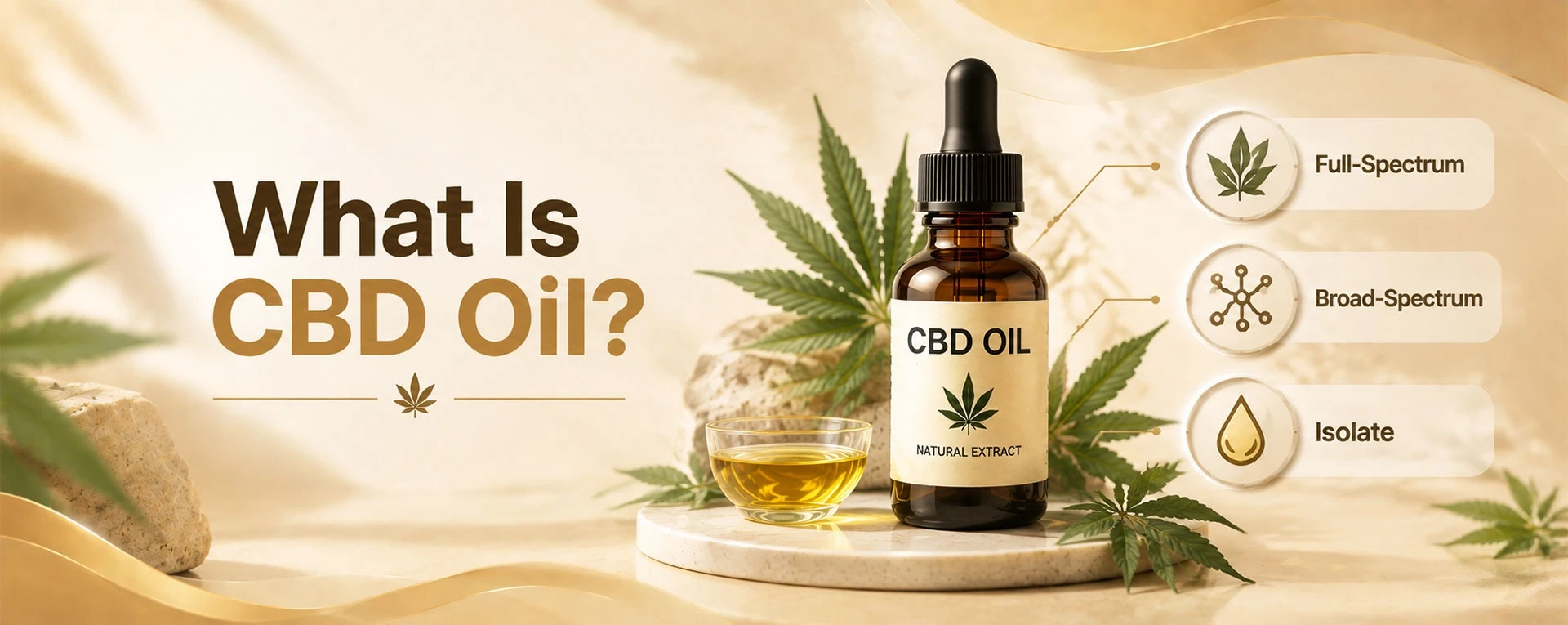
CBD oil is a liquid hemp extract blended with a carrier oil such as MCT oil, hemp seed oil, or another plant-based oil. A dropper lets you measure the amount you want to take. Many people place the oil under the tongue, hold it briefly, and then swallow it. This is known as sublingual use.
A CBD tincture may use one of three common extract types:
- Full-spectrum CBD: Contains CBD and other naturally occurring hemp compounds, including permitted trace THC where applicable.
- Broad-spectrum CBD: Contains several hemp compounds but is formulated without detectable THC according to testing.
- CBD isolate: Contains purified CBD without the other major hemp compounds.
In full-spectrum products, the entourage effect describes the proposed interaction between CBD, other cannabinoids, terpenes, and plant compounds. It is a reason some shoppers prefer full-spectrum formulas, but it should be viewed as a potential benefit, not a guaranteed outcome.
The main advantage of oil is control. If a bottle provides 500 mg, 1,000 mg, or 2,000 mg of CBD, the label should explain the amount in a full dropper and smaller measurements. That makes gradual adjustment easier when finding a comfortable routine. The tradeoff is a noticeable flavor and the inconvenience of measuring, especially with an unflavored formula.
What Are CBD Capsules and Softgels?
CBD capsules are pre-measured servings of CBD extract enclosed in a gelatin or plant-based shell. CBD softgels are similar, usually with a smooth shell and oil-based interior. Both are swallowed with water and travel through the digestive tract before reaching the bloodstream.
This format appeals to people who want consistency. If each capsule contains 10 mg or 25 mg, the amount is simple to record and repeat. There is no dropper, earthy taste, or measuring step. Some formulas also include MCT oil, hemp seed oil, terpenes, or prebiotic inulin. Carrier oils help keep CBD evenly distributed, while added botanicals can change the flavor or intended experience. Read the label so you know what else is included.
Capsules are not automatically stronger or weaker than oil. The practical difference is the delivery route and fixed serving size. Capsules may suit a daily routine, while someone adjusting a CBD dosage may prefer a tincture.
CBD Absorption, Onset, and Duration
How CBD oil is absorbed
When CBD oil is held under the tongue, some of the compound can pass through the tissues in the mouth before the rest is swallowed. This is why oil is generally associated with a faster CBD onset time. The comparison figures in the report estimate 15 to 45 minutes for onset and 13% to 35% bioavailability. Bioavailability means the share of an ingredient that reaches circulation and is available for the body to use.
Some of the oil is still swallowed, so the experience is not identical to a medication designed solely for sublingual delivery. The amount used, how long it is held, and whether it is taken with food can all influence the result. A typical CBD duration for oil is estimated at 4 to 6 hours.
How CBD capsules are absorbed
Capsules pass through the stomach and intestines, then travel through the liver before entering general circulation. This first-pass metabolism can reduce the amount of CBD that reaches the bloodstream, which helps explain the report’s estimated 6% to 15% bioavailability range. It also contributes to a slower onset, commonly 45 to 120 minutes.
The slower start does not mean the format is ineffective. The report places typical capsule duration at 6 to 8 hours, although food, metabolism, and formula can move that window. Taking a capsule with a meal containing some fat may improve absorption of oil-based compounds, but follow the product directions first.
Which Format Is Easier to Use?
CBD oil is flexible but requires measuring and a flavor decision. That tradeoff suits anyone who wants to fine-tune a serving.
Capsules are predictable and discreet. They travel easily and simplify record-keeping, making CBD softgels approachable for beginners and anyone who dislikes hemp flavor.
Choose CBD oil if you want:
- A faster typical onset
- Adjustable servings
- A choice of full-spectrum, broad-spectrum, or isolate formulas
- A product that can be used in small measured amounts
Choose CBD capsules if you want:
- A tasteless and discreet option
- A fixed serving every time
- Less measuring and less mess
- A format that may provide a longer CBD duration
CBD Oil vs CBD Capsules: Which Is Best for Your Routine?
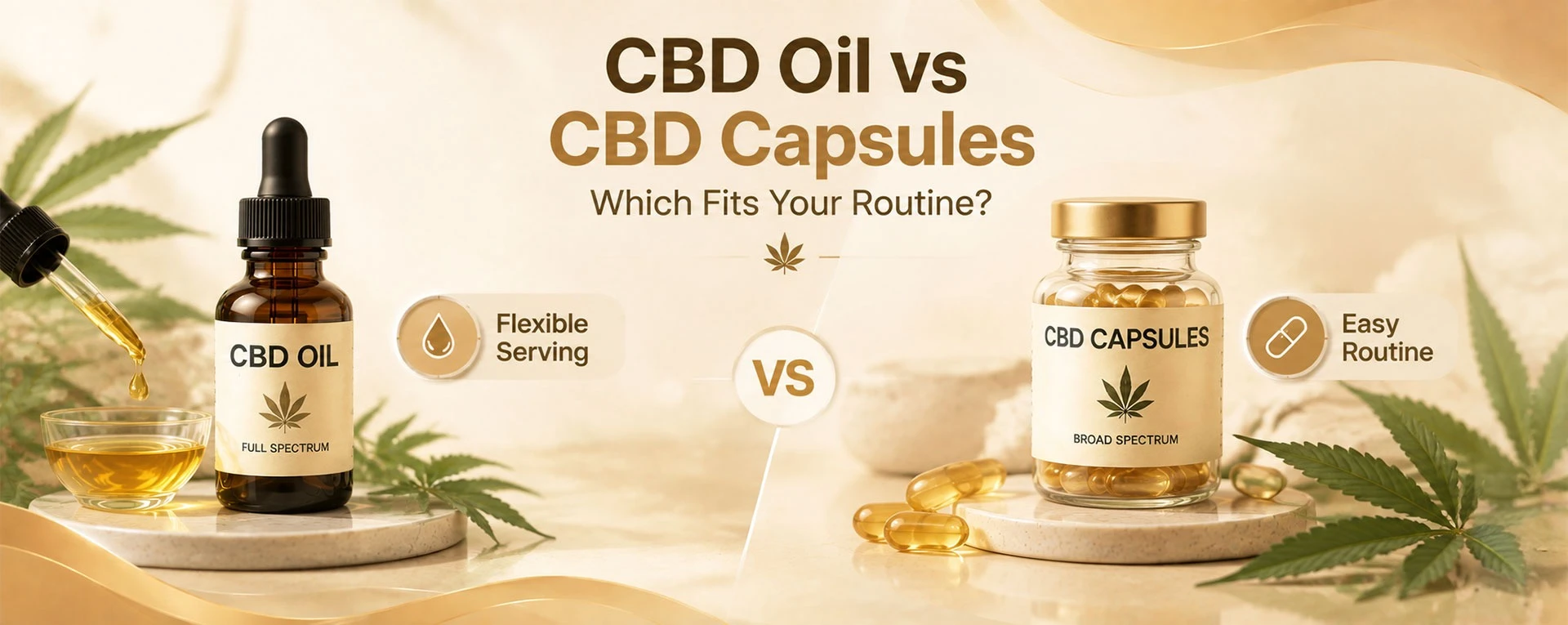
There is no single winner in the CBD oil vs CBD capsules comparison. The better choice is the one that matches your timing, taste preference, and ability to use it consistently. For people comparing CBD oil vs CBD capsules for anxiety, pain, or sleep, the delivery route mainly changes how quickly effects may begin and how long they may last, not the identity of the CBD itself.
- For faster onset: Oil is usually the more practical option because sublingual use may begin within 15 to 45 minutes.
- For a longer routine: Capsules may be more convenient when you want a fixed serving that can last approximately 6 to 8 hours.
- For flexible CBD dosage: Oil allows smaller adjustments than a fixed capsule.
- For taste sensitivity: Capsules are the simpler choice. CBD gummies are another flavored option, but they should be compared by CBD per serving and total ingredients.
- For first-time shoppers: Start by comparing the amount of CBD per serving, the extract type, the ingredient list, and the available Certificate of Analysis.
Some people use both formats at different times, such as oil when they want a more adjustable serving and capsules when they want a straightforward routine. If you combine products, add the CBD amounts together and avoid taking another serving before you have allowed enough time for the first one to take effect.
How to Compare Quality Before You Buy
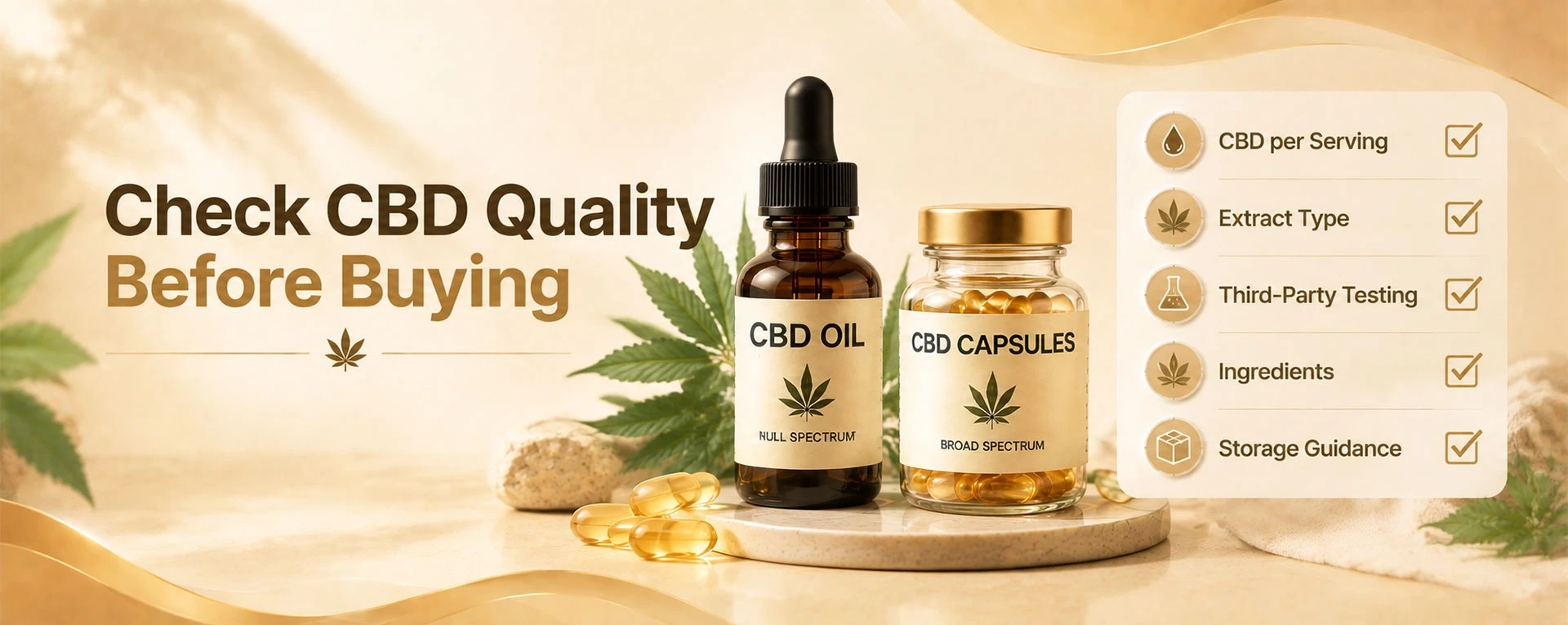
Format is only one part of the decision. Quality and labeling matter just as much. Whether you are browsing CBD oils and tinctures or looking for capsules in a local store, check for:
- CBD per serving: Do not compare bottle size alone. Compare the total CBD and the amount per serving.
- Extract type: Confirm whether the product is full-spectrum, broad-spectrum, or isolate.
- Third-party testing: Look for a recent Certificate of Analysis that identifies cannabinoids and screens for contaminants.
- Ingredients: Check carrier oils, sweeteners, flavorings, capsule materials, and added botanicals.
- Storage guidance: Follow the label’s instructions for heat, light, and shelf life.
Vibe District carries CBD options for shoppers who prefer to compare formats in person. Browse the CBD products in store collection, explore CBD topicals, or ask the team about serving information and testing details.
Cost and packaging can also shape the decision. Adjustable oil servings may reduce waste, while fixed capsules are easier to budget. Oil often comes in glass bottles, while capsules may use plastic or blister packs, so check recycling guidance.
Safety, Dosage, and Florida Shopping Considerations
CBD can cause drowsiness, dry mouth, appetite changes, diarrhea, or stomach discomfort. It can also interact with liver-processed medicines. The CDC’s CBD guidance notes possible liver damage, drug interactions, and sleepiness. Consult a qualified healthcare professional before use if you are pregnant, breastfeeding, managing a health condition, taking medication, or considering CBD for a child.
There is no universal CBD dosage. Follow the label, start with the lowest practical serving, and allow time before considering more. Figures such as 70 mg and 200 mg are not personal targets or universal safety limits. Guidance varies by country, product, and health factors.
For Florida shoppers, confirm the product is hemp-derived, review its Certificate of Analysis, and check the delta-9 THC result. The commonly cited hemp standard is less than 0.3% by weight, but cannabinoid rules can change. A reputable retailer should explain the label clearly.
Frequently Asked Questions
Are CBD capsules as effective as CBD oil?
Both can be useful, but oil usually has faster onset and adjustable dosing, while capsules provide a fixed serving and may last longer. Effectiveness depends on the product, serving size, timing, and individual response.
Is CBD oil faster than capsules?
Usually. Typical estimates place oil onset at 15 to 45 minutes and capsules at 45 to 120 minutes. Food, metabolism, formulation, and serving size can affect timing.
How many CBD capsules equal a serving of oil?
Compare milligrams, not droppers or capsule count. If one oil serving and one capsule each contain 25 mg, they contain the same labeled amount, although absorption and timing may differ.
Can you take CBD oil and capsules together?
Some people use both. Track the total CBD amount and allow time between servings. Ask a healthcare professional first if you take medication or have a relevant health condition.
Which is better for beginners, CBD oil or capsules?
Capsules suit a tasteless, pre-measured routine. Oil suits smaller, gradual adjustments. Read the label, choose a tested product, and use the format you can follow consistently.
The Bottom Line
CBD oil is typically faster and more adjustable, while CBD capsules are discreet and consistent. Oil is commonly estimated at 15 to 45 minutes for onset, 4 to 6 hours for duration, and 13% to 35% bioavailability. Capsules are estimated at 45 to 120 minutes, 6 to 8 hours, and 6% to 15%.
To compare a CBD tincture with a capsule, visit Vibe District in Hallandale Beach or browse the Vibe District store online. Compare serving size, ingredients, testing, and timing before choosing.
Sources and Further Reading
- Clinicians’ Guide to Cannabidiol and Hemp Oils, PubMed
- CBD Pharmacokinetics Systematic Review, PubMed
- Cannabidiol in Clinical Care, NCBI Bookshelf
- About CBD, CDC